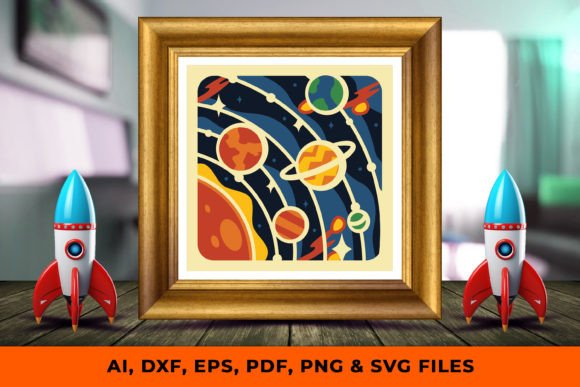
3D SVG Solar System for Shadow Boxes Review
As a brand designer who has spent the last decade refining visual identities for lifestyle brands and digital product creators, I approach every new graphic design asset with a critical eye. It is not enough for an illustration to look good in isolation; it must perform under the pressure of a real marketing campaign. Recently, I evaluated the 3D Shadow Box Solar System for an upcoming project involving a small business launching a line of educational STEM kits. The goal was to create a visual language that felt both whimsical and scientifically grounded, avoiding the sterile look of corporate education while maintaining professional credibility.
My first impression of the 3D Shadow Box Solar System was one of immediate depth. Unlike flat vector art that often feels disconnected from modern social media trends, this piece offers a layered aesthetic that mimics physical craftsmanship. The mood it creates is one of wonder and exploration, which is precisely the emotional tone required for brands selling creativity, learning, or aspirational lifestyle products. For a brand owner looking to refresh their social media graphics, this asset provides a instant upgrade in perceived value. It signals that the brand cares about detail, fostering audience trust before a single word of copy is read.
Elevating Brand Identity Through Layered Depth
In the context of brand identity and logo design, dimensionality is a powerful tool. When integrating the 3D Shadow Box Solar System into a broader visual kit, I found it particularly effective for packaging design and product label applications. Imagine a box for a children's toy or a limited-edition coffee blend; the shadow box effect suggests a window into another world. This works exceptionally well for printable design projects where tactile feel is simulated digitally. For the STEM kit launch, we utilized the asset as a central hero graphic on the box lid, allowing the planets to appear as if they were floating within the packaging itself.
Beyond physical goods, this digital product shines in the realm of content marketing. For bloggers and publishers, the asset serves as a striking header for articles about space, future planning, or universal concepts. The 3D SVG format ensures that whether you are scaling it for a massive billboard or a tiny favicon, the lines remain crisp. This scalability is crucial for maintaining visual hierarchy across different platforms. When used in Instagram posts or Pinterest pins, the depth of the design stops the scroll. In a feed saturated with flat, two-dimensional clipart, the shadow effect provides a necessary interruption that draws the eye.
Strategic Applications in Digital Campaigns
The versatility of Shadow Boxes as a style allows this asset to bridge the gap between editorial design and commercial advertising. I tested the 3D Shadow Box Solar System in several digital ads and email banners. The results were promising: the imagery conveyed complexity without clutter. For web design, using this as a section divider or a background element adds texture without overwhelming the text. It supports marketing goals by creating a stronger first impression and ensuring better product presentation. When customers see high-quality visuals, they subconsciously associate that quality with the product itself.
For small business branding, consistency is key. This asset can be the anchor for a design bundle that includes matching icons, borders, and typography treatments. By using the same shadow logic across Facebook ads, lead magnets, and media kits, a brand creates a cohesive narrative. The 3D Shadow Box Solar System helps achieve professional branding that feels bespoke rather than templated. It encourages emotional connection by tapping into the universal fascination with the cosmos, making campaigns more memorable and shareable.
Navigating Limitations and Design Constraints
However, no design asset is a one-size-fits-all solution. There are scenarios where the 3D Shadow Box Solar System should be used with caution. In formal corporate branding or industries requiring strict minimalism, such as legal or financial services, the decorative nature of shadow boxes might feel too playful. Additionally, in dense information layouts where data visualization is paramount, adding 3D elements can distract from the core message. If you are designing text-heavy ads or complex infographics, ensure the asset does not compete with the primary call to action.
Another consideration is legibility on small mobile graphics. While the 3D SVG is scalable, the intricate shadows that give the piece its character can sometimes muddy the image when shrunk to thumbnail size on a smartphone screen. It is vital to test readability in small sizes before finalizing any marketing visuals. Furthermore, placing this asset on low-contrast backgrounds can diminish the shadow effect, rendering the "3D" aspect invisible. Always pair it with backgrounds that allow the layers to pop, ensuring the modern design intent is preserved.
Practical Notes for the Creative Entrepreneur
From a practical standpoint, here are my top recommendations for integrating this graphic design asset into your workflow. First, test it with your brand color palette. While the default colors may be vibrant, recoloring the planets to match your specific hex codes can make the asset feel native to your brand. Second, check black and white usage; ensure the shadow layers still provide contrast when printed in monochrome for cost-effective promotional materials.
Always place it inside real campaign mockups before committing. A design often looks different on a canvas than it does on a simulated product package or a phone screen. Preview it on mobile screens specifically to gauge how the depth translates on smaller displays. When pairing with typography, I found this asset works beautifully with serif font styles for an editorial look, but also pairs well with clean sans serif font families for a modern tech vibe. Avoid overly ornate script font or handwritten font styles unless you are aiming for a very specific, whimsical aesthetic, as they may clash with the geometric precision of the solar system.
Finally, review spacing and balance. The beauty of Shadow Boxes lies in the negative space between layers. Do not crowd the design. And most importantly, confirm commercial licensing before using it in paid campaigns, client work, or business branding. Whether you are a digital seller creating templates or an online coach building a course, understanding the rights associated with the commercial design is non-negotiable. Sourced from a reputable creative marketplace, assets like the 3D Shadow Box Solar System offer a stunning combination of depth and creativity that can elevate your content creation from standard to spectacular.